 English
 Español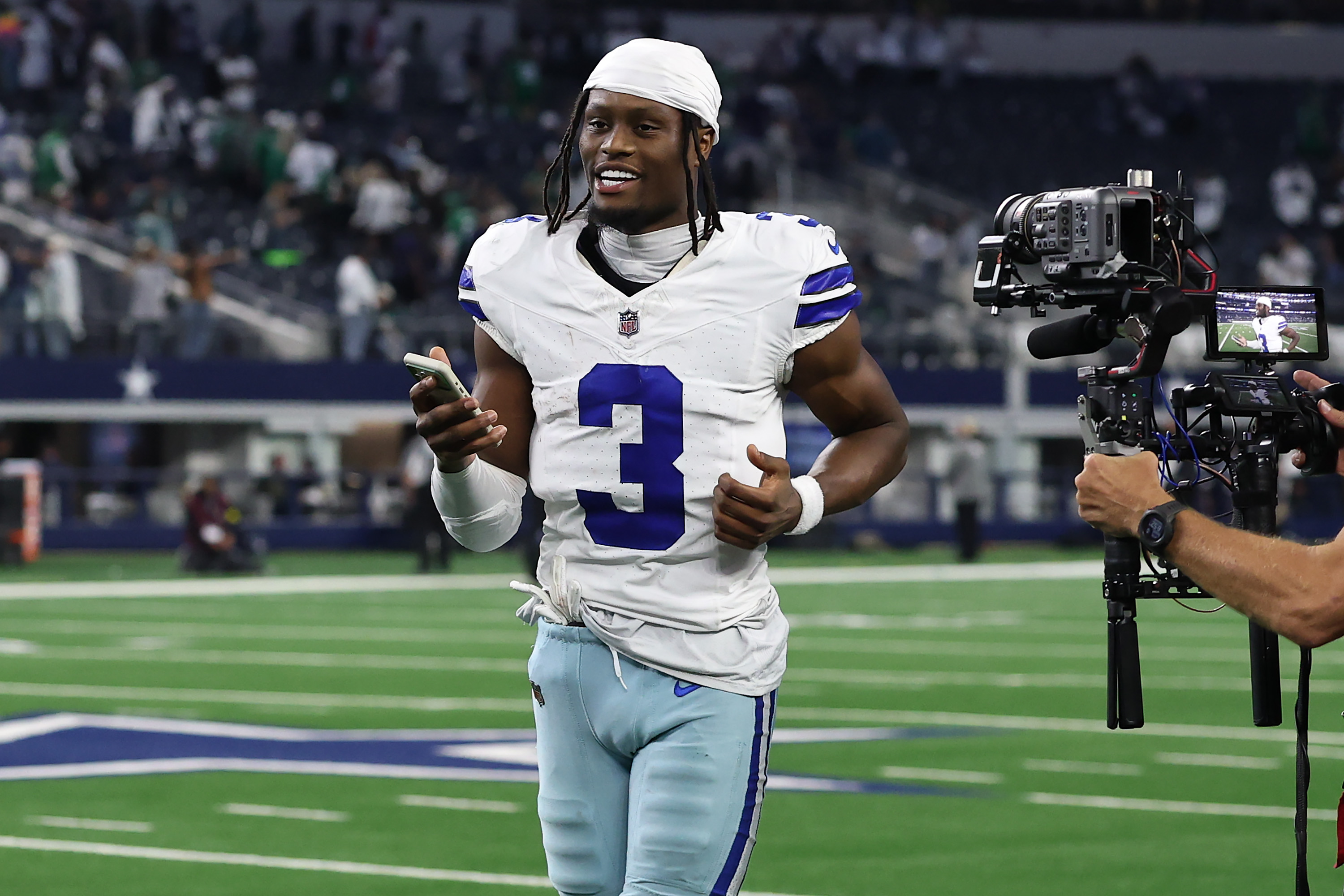
INDIANAPOLIS — The Dallas Cowboys plan to place the franchise tag on wide receiver George Pickens on Friday, two people with knowledge of the decision confirmed to Yahoo Sports on Thursday night.
The Cowboys acquired Pickens from the Pittsburgh Steelers last May in exchange for a 2026 third-round draft pick and swap of 2027 fifth- and sixth-round picks.
Pickens followed his three seasons with the team that selected him in the second round of the 2022 NFL Draft with a career-best campaign in his Dallas debut.
His 1,429 yards led skill players on the Cowboys’ No. 7-ranked offense, while Pickens’ nine touchdowns ranked second only to running back Javonte Williams. Pickens’ 84.1 receiving yards per game edged out the 76.9 Cowboys teammate CeeDee Lamb put up.
[Get more Cowboys news: Dallas team feed]
The quick start and beyond-expectation production convinced the Cowboys they do not want to risk Pickens hitting the open market and entering a bidding war. Instead, Dallas will guarantee Pickens the franchise tag cost for receivers, which is projected to be $28.8 million. If the Cowboys and Pickens do not reach a long-term deal before the July 15 deadline, the Cowboys would owe Pickens all $28.8 million — and need to take that entire cap hit — this season.
Dallas already is paying quarterback Dak Prescott a contract that averages to $60 million per year and Lamb $34 million per year. But Dallas’ explosiveness in 2025 stemmed in large part from the pick-your-poison passing game that Prescott, Lamb and Pickens created in tandem.
An NFC assistant who faced the Cowboys last year described Pickens as a “monster, legit top-five talent” when they game-planned for the Cowboys.
“I mean, he could do everything,” the assistant said this week from the NFL scouting combine. “He could go inside, he's got run-after-catch [ability], he could take the top off, win contested catches. So he was a tough cover for us every time he caught the ball. We were kind of holding on for dear life.
“And the fact that you got him and CeeDee? So yeah, they're really cooking with gas.”
Cowboys fans shudder to think of an imminent future without Lamb and Pickens both available. But Pickens’ 2025 success will not yet guarantee a multiyear deal from the Cowboys ahead of the 2026 NFL season. Why? Here are three reasons:
1. Off-field vs. on-field confidence
The Cowboys, and opponents across the league, don’t doubt Pickens’ talent and ability. But his off-field inconsistency, as well as some questions about the consistency of his on-field effort, give Dallas pause in offering a multiyear deal. Pickens fared better with the Cowboys locker room than he had in his final year in Pittsburgh that prompted then-head coach Mike Tomlin to move on from him. But he still missed curfew ahead of the Cowboys’ game in Las Vegas, prompting head coach Brian Schottenheimer to hold Pickens out of the first offensive series and part of the second. Lamb missed curfew with Pickens that night, too. And questions about his attendance and punctuality canvassed the season.
Often, teams are willing to tolerate more variable work ethic and consistency from their most talented players. But the Cowboys want to understand whether Pickens’ 2025 behavior will be his new normal or a honeymoon-year peak of his ability to comply with team rules. A franchise-tag season gives the Cowboys a broader sample size on which to make decisions.
2. Skyrocketing cap means skyrocketing costs at premium positions
When the Cowboys awarded Prescott a $40 million per year contract in 2021, the cost seemed enormous. Four years later, salaries start with a 4 for not only quarterbacks, but also members of the receiver and edge rusher market. By no means, after one 1,400-yard Cowboys season, and good but inconsistent play in Pittsburgh, does Pickens command the caliber of money that Cincinnati Bengals receiver Ja’Marr Chase received when the triple-crown winner drew a $41 million-per-year deal last spring. But executives from several teams predicted any multiyear deal for Pickens would need to start at $30 million, some even predicting an average annual salary as high as $36 million per year. That number notably would surpass Lamb’s $34 million per year, potentially complicating the 1A-1B relationship Lamb and Pickens have developed.
A starting point for negotiations could factor in the cost of the franchise tag over the next two seasons, though exact numbers require more clarity on the salary cap. The NFL and NFLPA met Thursday to discuss the final 2026 salary cap number, which is expected to land between $301 and $305 million.
Even with that cap space, the Cowboys have reason to pause in offering a multiyear contract. Doing so would reverse a negotiating message the Cowboys just sent.
3. The Micah Parsons Effect
Nine months ago, the Cowboys still held their decade-long negotiating reputation. Players and agents knew that if they followed the lead of running back Ezekiel Elliott, quarterback Dak Prescott, edge rusher DeMarcus Lawrence and wide receiver CeeDee Lamb, that waiting for their money would nearly guarantee a record-setting payday. Perform, and the Cowboys would eventually cave. Rather than save by getting deals done early, Dallas created a pattern of valuing certainty over savings and losing leverage accordingly.
Then the Cowboys traded three-time Pro Bowl edge rusher Micah Parsons to the Green Bay Packers. And suddenly, the calculus and predictability of the structure that begins with team owner/general manager Jerry Jones changed. No longer could players feel sure a tough stance would increase their chance of a payday in their own city. Dallas regained at least some of the leverage it’d lost in a string of prior negotiations.
Parsons’ paradigm holds another layer of relevance, too. While the Cowboys didn’t doubt his high-end ability, Jones said publicly and frequently that he wanted not only the caliber of player but also a different style of leadership to feel comfortable awarding another mega contract. Without feeling confident that Parsons’ locker-room presence aligned with the front office’s vision for him, the Cowboys chose to capitalize on the value he could provide in a trade. Parsons received a contract from the Packers worth $47 million a year. The Cowboys flipped that for two first-round picks and Green Bay defensive tackle Kenny Clark, later using that capital to acquire four-time Pro Bowl defensive tackle Quinnen Williams from the Jets at the trade deadline.
Pickens and Parsons don’t offer identical situations on nor off the field. But each inspired more confidence from the Cowboys on the field than off, and each have prompted questions from the Cowboys about their value relative to a quickly-growing market. Put another way: If the Cowboys apply the same logic to Pickens’ tag as they did to Parsons’ future, they will not reach a long-term deal this offseason.
Could circumstances change? Sure. Perhaps Pickens’ up-and-down career start will create more leniency from his agent David Mulugheta, a historically tough negotiator who commands top-of-market deals for his client. Or perhaps Dallas sees the tea leaves of a rising salary cap and decides to secure a talented receiver who seems to fit better in Dallas than many places.
Opponents will watch how Pickens responds to his 2026 contractual status. Will Pickens lock in?
“Once he makes a decision to turn on the switch, he's a force,” said an AFC defensive assistant who has game-planned for Pickens. “Once you see him, he's a big guy. And he's faster in person than what it is on tape. He's more physical in person than what it is on tape. He's a really good receiver. He's competitive when he wants to be.
“Consistency is going to always be something that comes up with his name, but there's not five receivers better than him when he turns it on.”