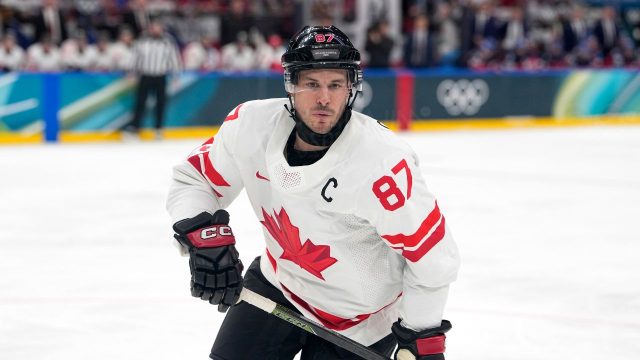
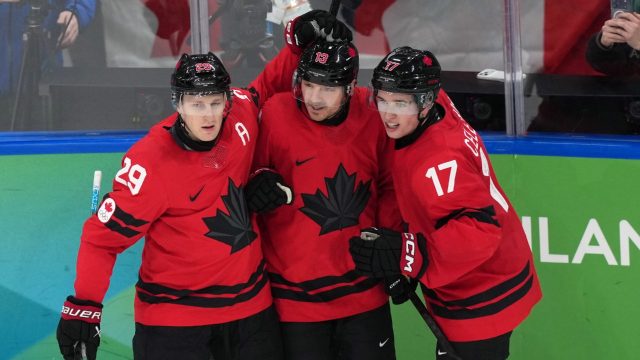
When Canada took a 3-2 lead late in the semifinal against Finland, the Finnish bench challenged it to review an earlier zone entry for offside. It was a close call — as close as you can get — but the call on the ice was upheld, and the goal stood as the game-winner that sent Canada to the gold-medal game.
But would Finland have had a better chance to overturn Canada’s tying goal?
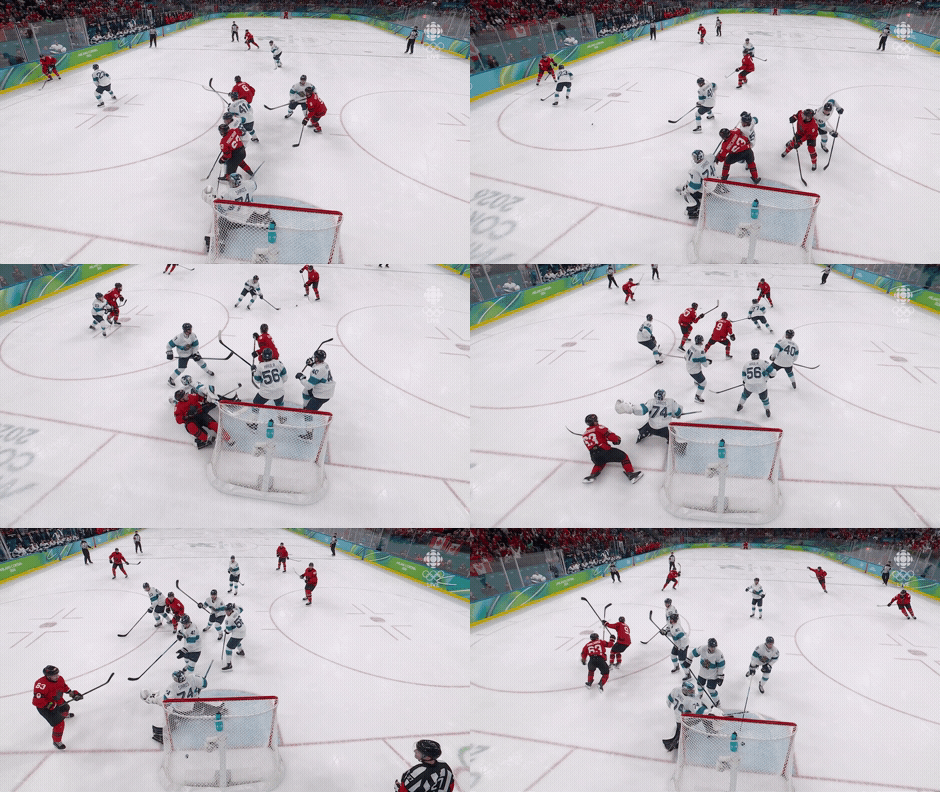
Prior to Shea Theodore’s goal, Brad Marchand was jostling for position in front of the net with Finland’s Erik Haula. Marchand enters the crease and falls into Finland goalie Juuse Saros as he makes the first save, knocking the goalie over. Saros had to rush back to his feet as the rebound kicked out to Travis Sanheim at the right point, and re-adjust as the pass was sent to Theodore for the one-timer.
Do you think this would have been called back for goalie interference?
To the rulebook! Here’s how Rule 69.1 reads in the IIHF’s 2025-26 Rulebook:
This rule is based on the premise that an attacking Player’s position, whether inside or outside the goal crease, should not, by itself, determine whether a goal should be allowed or disallowed. In other words, goals scored while attacking Players are standing in the goal crease may, in appropriate circumstances be allowed. Goals should be disallowed only if:
(I) an attacking Player, either by their positioning or by a “relevant contact”, impairs the goalkeeper’s ability to move freely within their goal crease or defend their goal; or
(II) an attacking Player initiates intentional or deliberate contact with a goalkeeper, inside or outside of their goal crease.
“Incidental contact” with a goalkeeper will be permitted, and resulting goals allowed, when such contact is initiated outside of the goal crease, provided the attacking Player has made a reasonable effort to avoid such contact.
For purposes of this rule, “contact / relevant contact” whether “incidental or otherwise”, shall mean any contact that is made between or among a goalkeeper and attacking Player(s), whether by means of a stick or any part of the body. The overriding rationale of this rule is that a goalkeeper should have the ability to move freely within their goal crease without being hindered by the actions of an attacking Player.
That’s a lot to go over, but to begin, Marchand just being in the crease isn’t, in itself, enough to overturn the goal. What needs to be considered is 1) did Marchand deliberately make contact with Saros, and 2) was Saros’ ability to defend his goal impeded?
Perhaps as close as the offside review, how you interpret this play will depend on your perspective:
“What did I see? I kind of got shoved into him, and we know that you can’t be in the paint when a goal goes in, so I just tried to get out of the paint and whack the puck back up top and then get out of the way so guys could kind of shoot it,” Marchand said. “Honestly, once I got in the paint and kind of got pushed at him, I was just trying to get out of the way again.”
Saros’ take: “I mean, yeah, obviously he’s laying top of me, so that’s why I can’t get up. But yeah, it is what it is.”
By NHL standards, it has been hard to overturn challenges on goalie interference, and even harder in the playoffs. Current Anaheim Ducks video coach Andrew Brewer wrote last season for Sportsnet.ca that NHL teams had a roughly 50 per cent success rate on regular-season goalie interference challenges in 2023-24 and 2024-25, but in the playoffs, that plummets to around 30 per cent or lower.
In the NHL this regular season, teams are 22-43 when challenging for goalie interference.
While today’s play occurred in international hockey, let’s look at two goalie-interference challenges in the NHL this season. No two of these plays are exactly the same, but these two seemed to be the most similar to Marchand’s run-in with Saros on Friday because they involved contact between a defender, offender, goalie, and a question if the netminder had a chance to recover and play his position.
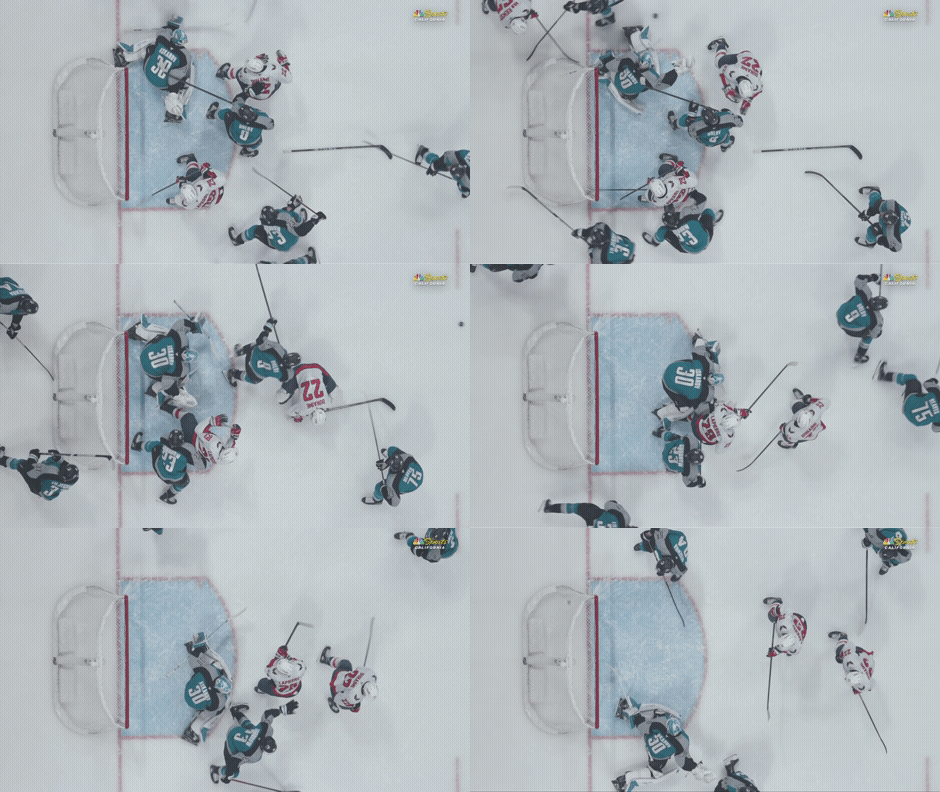
In a Dec. 3 Washington-San Jose game with the Capitals up 1-0 in the first period, the Sharks challenged this Caps goal for goalie interference. Hendrix Lapierre makes contact, arguably directed by the San Jose defenceman. However, Yaroslav Askarov is able to compose himself and face the shooter again before the puck goes in. The goal stood, and the reasoning was that the incidental contact “did not impair Askarov’s ability to play his position in the crease.”
Another example from the NHL, but from the reverse perspective.
In a Jan. 16 game between Carolina and Florida, Eetu Luostarinen makes contact with Brandon Bussi, being pushed into the netminder, or falling into him, depending on your perspective. A big difference here is that he knocks Bussi’s stick loose. On this one, with Carolina leading 4-1 in the third period, the call on the ice was no goal. Florida challenged it, but the initial call was upheld because the “attacking player, either by his positioning or by contact, impairs the goalkeeper’s ability to move freely within his crease or defend his goal.”
Once again, overturning the call was not easy.
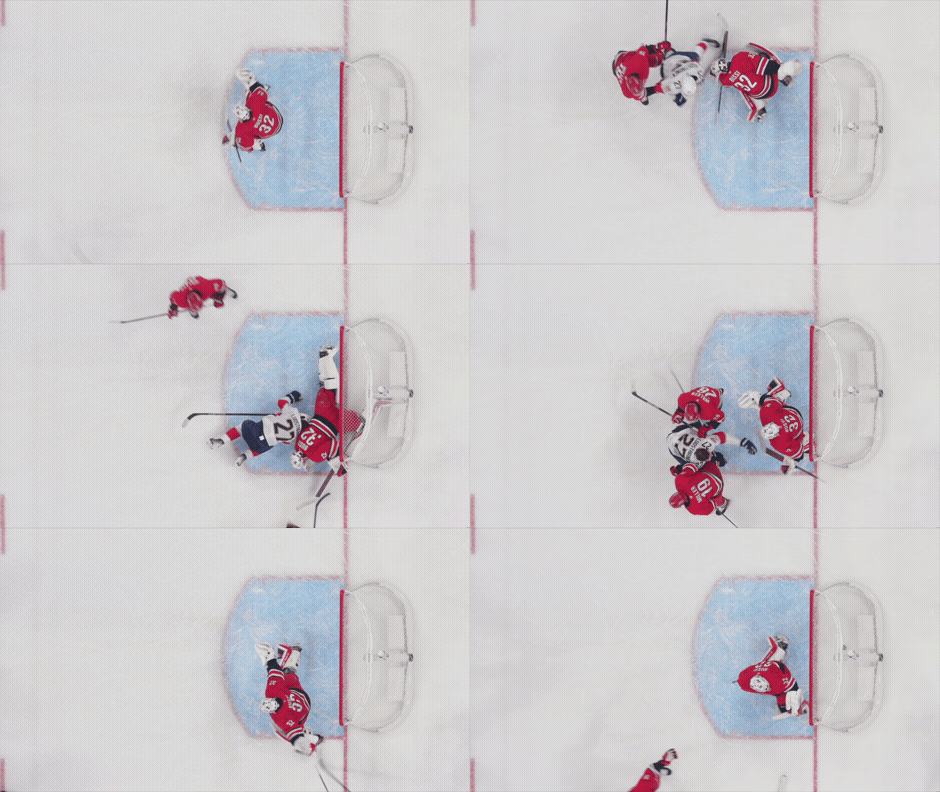
From an NHL measure, overturning the calls on the ice for goalie interference has been more difficult than ever this season. Given that, and since Saros was able to regain his footing and move to face both of Canada’s defencemen before another shot was taken, a case could be made that this goal would have stood in the NHL this season.
A failed challenge would have put Finland a man short with 9:26 left in the period, but this is international hockey, and perhaps it would have been viewed differently by the referees (and not the situation room).
Would the risk have been worth it? No matter how you look at it, this was not an obvious call.
“Well, I mean, if they didn’t like it, they would’ve challenged it. I knew it was a goal,” Marchand said.
Like the offside review on the game-winner with less than a minute left in regulation and the challenge that came with it, this goalie interference question on the tying goal was as close as it can get and will be one to debate coming out of the Olympics.